Clever Conveying
March 2, 2026 12:43 pmBy Karl Kleppek, President of Jorgensen Conveyor and Filtration Solutions. Featured in Manufacturing Today
Metalworking Applications Drive Advancements in Conveyor Technology
Machine tools cutting metal parts generate chips of all shapes and sizes, and the efficient evacuation of these chips is a must. To accomplish this, manufacturing facilities rely on innovative conveyor technologies, two of which are conveyor systems equipped with advanced filtration cells for self-cleaning capability and those that are magnetic-based in design.
In addition to these two types of conveyors, another significant advancement is that they are configurable. Where previously, metalworking shops had only two conveyor belt options from which to choose, they can now select from multiple configurations of features and conveyor types that allow them to match a system to their specific application needs.
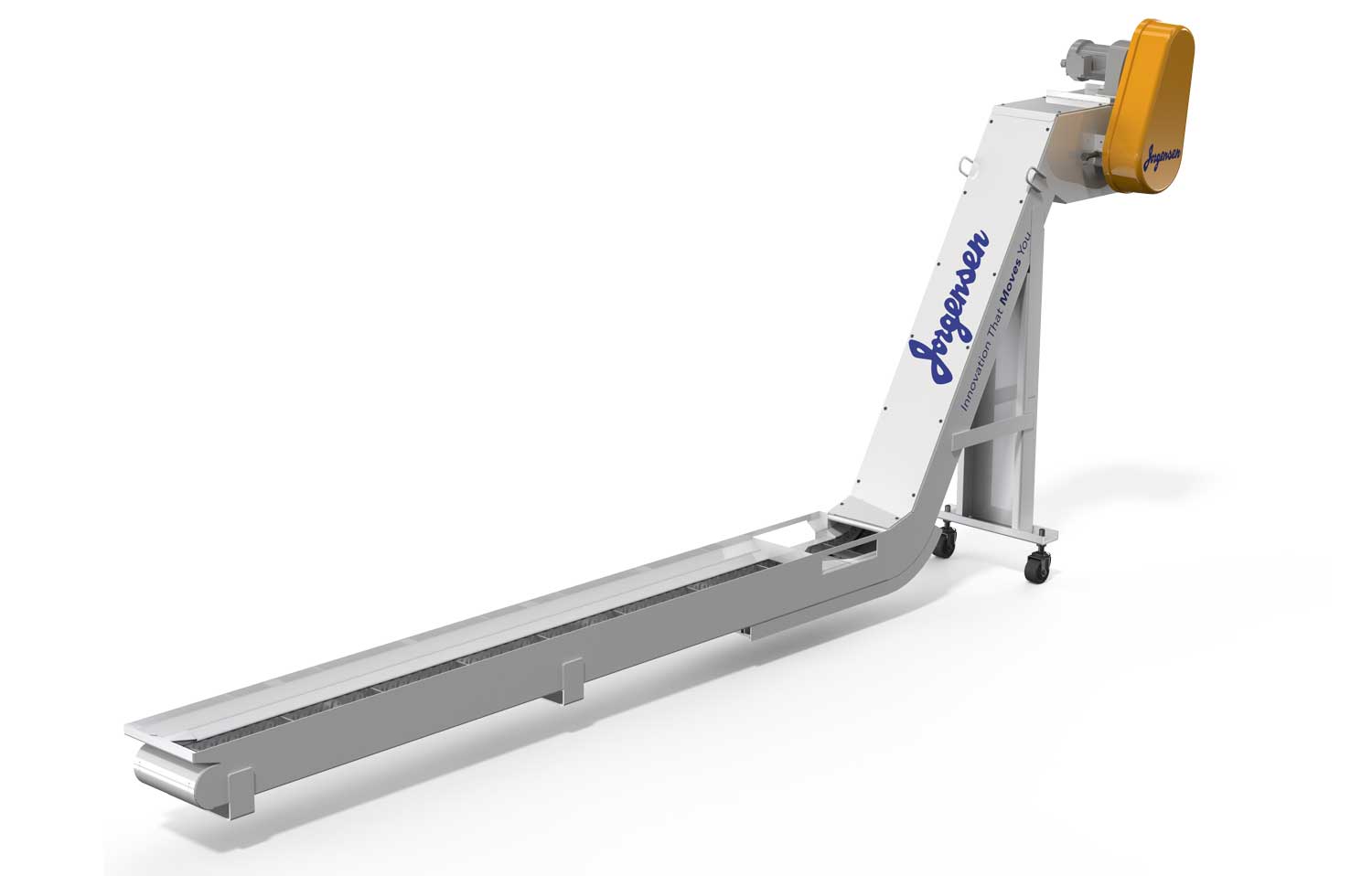
Chips leaving a machine tool are typically covered in cutting fluid used to keep machining operations cool. This is why conveyor original equipment manufacturers (OEMs) combined filtering with conveying. These self-cleaning conveyors enable efficient filtration of fine chips to 80-micron nominal and are the first economical non-drum style conveyors for filtration below 100-micron. The conveyors use a two-stage chip removal and filtration process that carries out large chips on a hinged steel belt. Fine chips flow with used coolant between the belt runs to a flow-through filtering cell where they are separated from the coolant.
Clean coolant is discharged to the coolant tank while filtered fines are brushed from the filter screen and flow to the bottom of the conveyor. There, they are picked up by the belt cleats and discharged. By dramatically reducing the number of chips migrating to a machine tool coolant tank, it decreases downtime for tank cleaning and maintenance. As a result, shops experience improved pump, tooling and coolant life for less waste and better part surface finishes.
Small cast iron, steel and other ferrous metal chips are hard to remove from coolant and are particularly problematic because they can rust quickly and/or congeal into a messy, hard-to-remove sludge. Permeated with these chips, the coolant soon turns rancid and requires programmed stops for cleaning both the coolant tank and machine tools. The resulting economic impact is significant when factoring in the compounding results of lost productivity from machine downtime and the increased cost of recycling or replacing cutting cooling fluid.
To eliminate the problems associated with cast iron, steel and other ferrous metal chips, conveyor OEMs offer those conveyor systems that incorporate the use of magnets. Such systems have proven more effective than traditional hinged belt and drag flight conveyors at removing fine ferrous chips, especially in high coolant flow rate applications.
As gravity causes larger chips to settle to the bottom, a powerful array of magnets installed below a conveyor’s load and lower curve sections attract and hold fine ferrous chips that may otherwise remain in suspension. Once at the bottom of the conveyor, the chips are scraped and carried away by stainless steel cleats to the discharge section at the top of the conveyor. The filtered and clean coolant is then ready for additional filtration, recycling or reuse.
As in all machining applications, efficient chip evacuation and cleaner coolant improve machining accuracy and surface finishes while prolonging cutting tool life. Additional benefits include reduced chip and sludge buildup in the clean coolant tank, resulting in less downtime and lost productivity for cleaning. Maintaining cleaner coolant also reduces the costs associated with coolant replacement and disposal, which supports sustainable manufacturing best practices. The more shops can recycle, the more they can save on consumable costs and the less they impact the environment.
Similarly, ferrous metal recycling also presents sustainable manufacturing opportunities. Among the most profitable and recyclable materials available, the demand for ferrous metal continues to rise. The market for recycled steel is growing globally, and this presents the potential for an additional income stream while supporting sustainable manufacturing processes.
Conveyor systems equipped with coolant filtration cells, as well as those that incorporate magnets, have proven game changers for shops heavily involved in metal part machining. In addition to simplifying the overall operation with reduced tank and machine tool cleaning, the economic and sustainability factors are significant. Increased productivity, decreased cost and the ability to recycle what was previously considered a waste byproduct of metal machining all add up to increased efficiency and profit.
Categorised in: In the Press






Comments are closed here.